


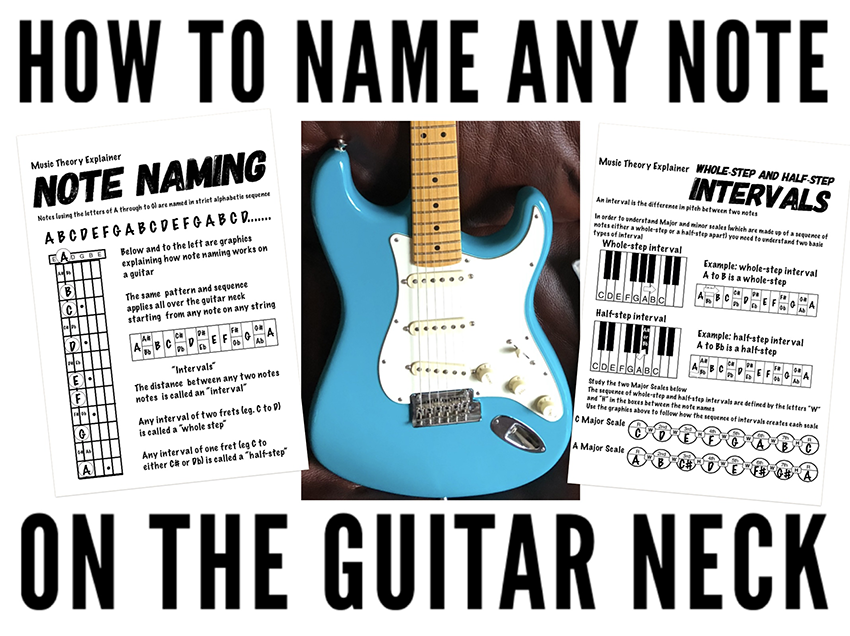
How to name any note on the guitar neck
A guide to note naming for guitar players and teachers
The best way to teach music theory to guitar players is to build on what your students already know
The names of the open strings
The notes produced by sounding the open strings of the guitar is a great place to start as by the time they can move between the first eight beginners chords in time to music your student will have been (probably) using a clip on guitar tuner to identify the name of the open strings and to tune those strings to a set of particular notes (E A D G B and E) They will either know or can easily be made aware of the note produced by sounding the "second thickest string"
If they have not been using a guitar tuner you can simply refer them to the chord diagrams that they have been using to this point in which the E A D G B and E strings are identified
The open A string is a great place to start a study of music theory
When giving a first music theory lesson I normally home in on the notes to be found on the A string to explore with my students the following two ideas
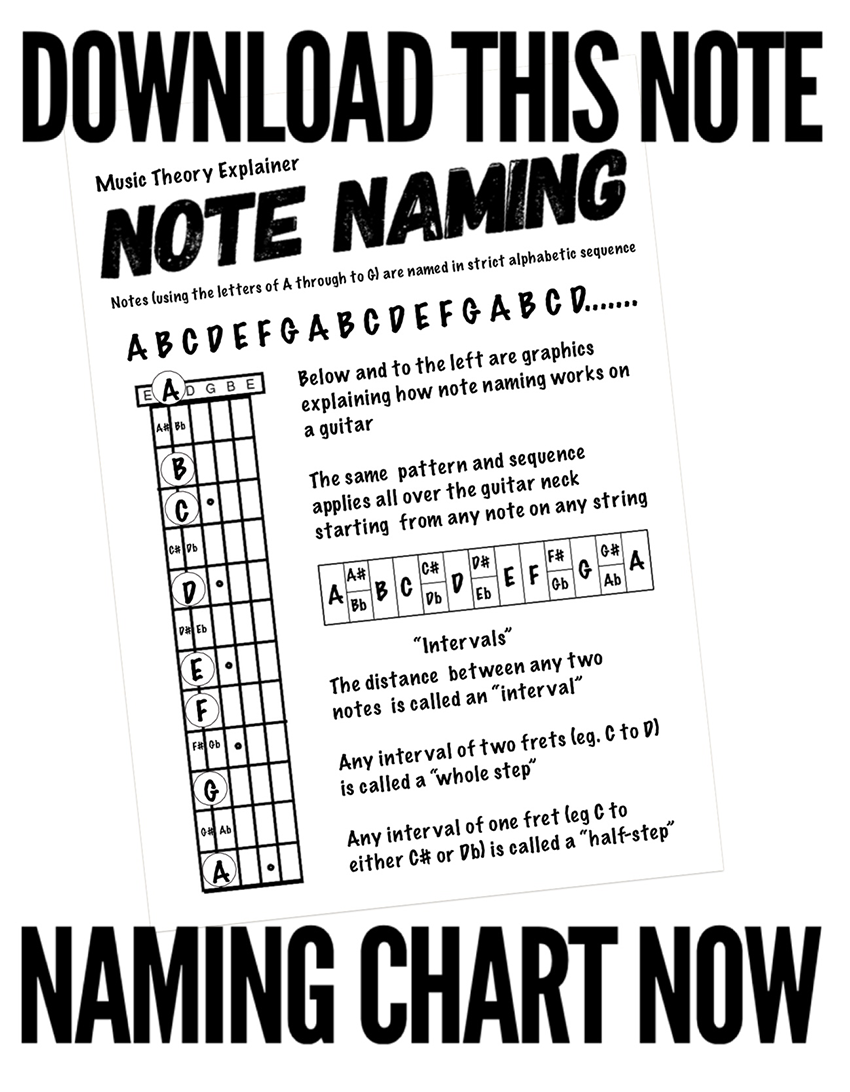
Follow the link below to download the free guitar music theory explainer document that you can see in the graphic above
The early stages of learning to play guitar should only be about moving between open chord shapes and strumming in time to backing tracks and one of the most important pieces of advice that I give to would be guitar teachers is to introduce music theory to your students at a time when it solves problems that they have actually got now
Bar Chords help us to name any note on the neck
I find that bar (or barre if you prefer) chords are the best way to introduce a beginner/intermediate guitar player to the practical application of music theory because knowing where they are located and how they are named solves a problem that a guitar player has right now
The problem: A player can play basic bar or power chord shapes but they have no mental system that allows them to find or identify the "root" notes that the chords are based upon
The solution: Give them a formula that will allow them to identify the name (or more accurately the choice of names sometimes) attatched to any note on any string on the guitar neck
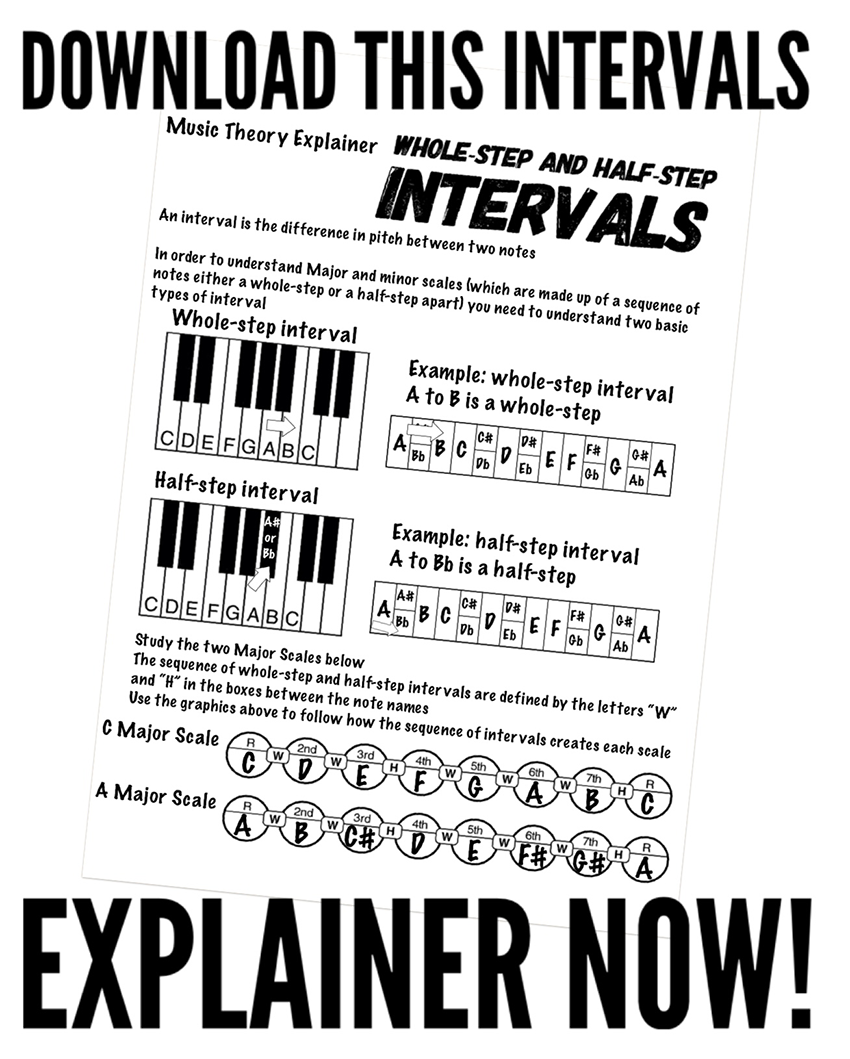
Follow the link below to download the free guitar music theory explainer document that you can see in the graphic above
If guitar players learn how to identify the notes to be found on the (low) E and A strings they will be able to hang a bar (or two note "power") chord on any of those notes that they choose
They will also be equipped with a "formula" that allows them to identify notes anywhere on the neck of the guitar In the course of doing so they will become aware of and then familiar with the process by which notes are identified and named
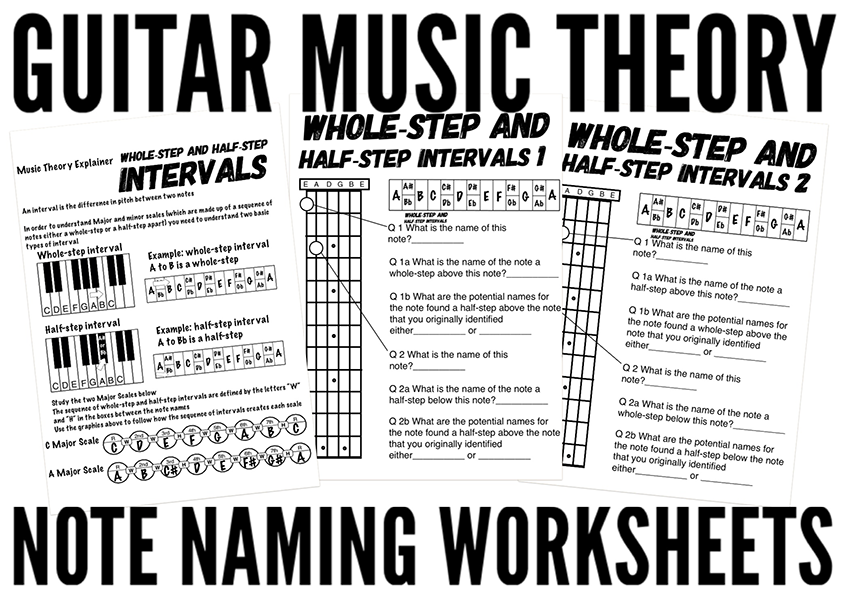
Note naming worksheets
The graphic above shows the free whole and half step "explainer" handout that you can download free from this page alongside some of the worksheets from the full guitar teacher's download that an educator may use with his or her students in order to reinforce the knowledge gained and capabilities developed during lessons
There are two important concepts that your students need to understand if they are to develop an ability to name and identify any note on the guitar neck
1: The concept of whole step and half step intervals
and that........
2: Scales follow the alphabetic sequence (A B C D etc)
The imprtance of the alphabetic sequence will become apparent in future lessons where whole-step and half step intervals are combined into a defined and unchanging sequence of intervals in order to allow a student to construct (and just as importantly to understand) all Major scales
Why Major scales are so important
No matter what kind of music our students want to play the Major scale is the key to understanding how the theory of music functions and it is vital that our students come to understand that all Major scales follow the same sequence of whole and half step intervals (W-W-H-W-W-W-H) and that when thy can construct a single Major scale then they will be in a position to use that same sequence to construct any Major scale
During the course of the lesson I help students develop and then apply a knowledge of whole step and half step intervals to construct the A Major Scale on a single string I point out early and repeatedly that using a single string is not the way that folks generally play major scales but it is the best way to understand what a scale is and how it works
There are a few worksheets from the guitar teacher's download that I also use to reiforce the principles and ideas covered during the sessions relating to note naming and scale construction
Simple but not easy!
This stuff is simple but it is not easy At the start of sessions that deal with basic music theory I stress to my students that if they can count from one to twelve and know the alphabet from A through to G they are in posession of the mental tool kit that will allow them to understand how all western music works but that developing that understanding will at times appear to be frustrating

Download everything that you need to teach guitar
Download all of the resources that you see and hear on this website for a single one off payment of $25.00